BOGI members discover the fascinating journey of vanilla
A group of BOGI members recently visited Terry and Sandy Hartnett’s home to learn about growing, harvesting and processing vanilla.
It was a fascinating hands-on visit, with members able to see the plants, discuss flowering and harvesting, and discover some of the many ways Terry and Sandy use and preserve their vanilla.
Vanilla is one of the most labour-intensive crops you can grow, but for those willing to put in the effort, the reward is a steady supply of fragrant pods for cooking, gifting, and even perfuming the house.
We visited a home garden where Terry and his family have been growing vanilla beans, and the insights from the visit cover everything from pollination to the dinner plate.
🌱 Growing Vanilla at Home
Growing: Patience, Shade, and a Steady Hand
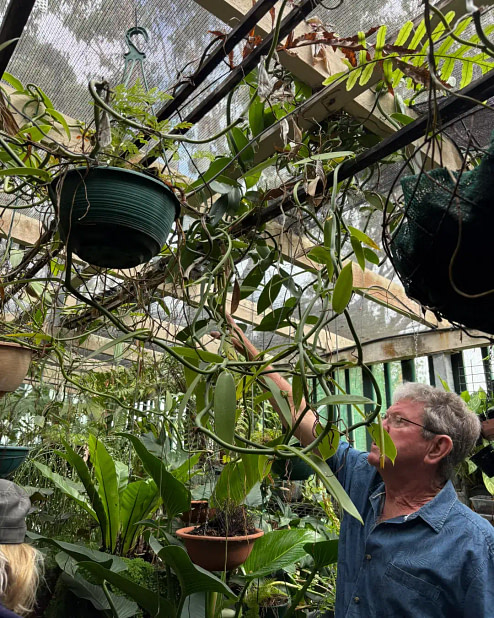
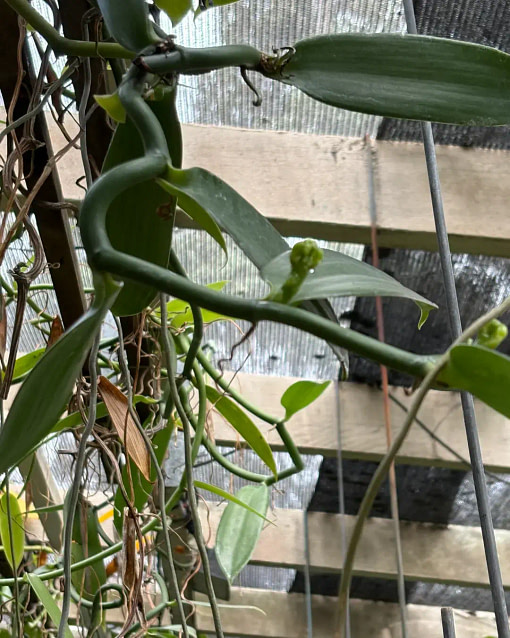
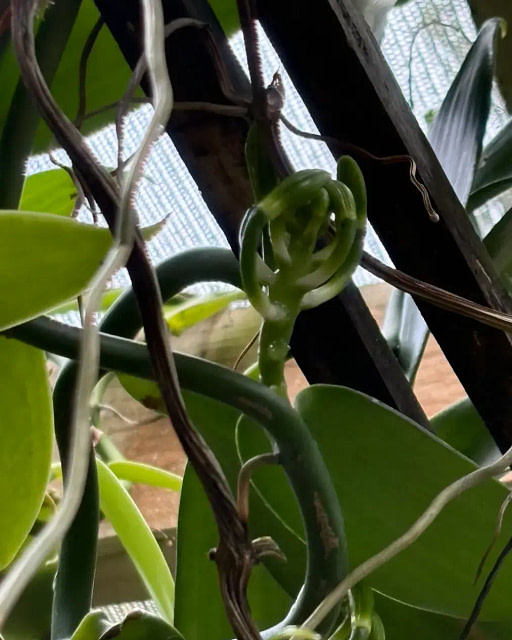
Vanilla plants are originally from up north, and they like it shady — full shade is ideal. The plants themselves are surprisingly prickly to handle, so gloves are a good idea when working among them. New flowers appear on the vine as small, rounded buds — "like little knuckles," as Terry describes them — and identifying them early helps you plan for the pollination window ahead.
Step-by-Step Hand Pollination
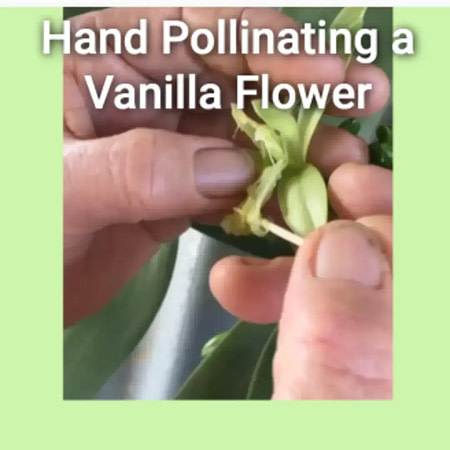
- Time it right: Inspect your vanilla vines early in the morning (between 7:00 AM and 11:00 aM). The flower opens for only one day and closes by afternoon.
- Expose the reproductive parts: Gently hold the lower petal (the labellum) or peel back the petals and sepals to clearly see the inner column of the flower.
- Locate the rostellum: Find the rostellum, which is a small, delicate tissue flap that naturally separates the male anther (containing the yellow pollen) from the female stigma.
- Lift the flap: Use a clean toothpick or a small splinter of wood to gently lift or push up the rostellum flap.
- Press pollen to stigma: Use your thumb and finger (or the toothpick) to fold or press the pollen-bearing anther down against the newly exposed, sticky stigma underneath.
- Gently squeeze: Apply a light squeeze so the pollen makes firm contact and sticks to the female surface.
After Pollination
- Check your work: Within 2 to 3 weeks, a successful pollination causes the flower's stem (ovary) to swell and turn a bold green.
- Handle failures: If the flower turns yellow, shrivels, and falls off without swelling, the pollination did not work.
- Harvest timeline: The resulting vanilla bean takes about 8 to 9 months to fully mature on the vine before it is ready to harvest and cure.
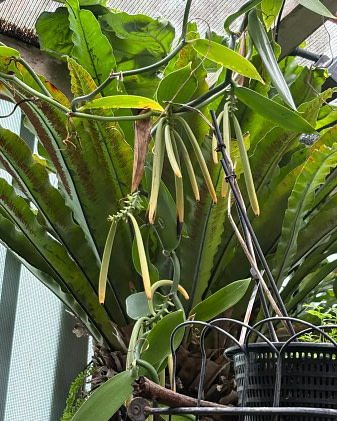
And what a window it is. Each vanilla flower lasts just one day. They typically open between 7:00 and 11:00 in the morning, depending on the weather, and once that day is done, the flower dies. That means pollination has to happen by hand, and it has to happen fast. In this garden, roughly 800 flowers are hand-pollinated each season — a painstaking process that yields around 70 beans in a good year. The previous year's harvest was only 20, showing just how variable the crop can be.
Beans develop in twos and threes along the vine, and they start to go wrinkly as they approach readiness.
🫘 From Harvest to Curing
The key sign that a vanilla bean is ready to pick is colour. When the beans turn black on the vine, they're ripe. Pick them too early, and they'll simply ferment or rot rather than curing properly. Left on the vine when not yet ripe, however, they'll come to no harm — patience is the name of the game.
Once picked, the beans need to be processed within about four or five days.
☀️ Drying and Developing the Flavour
Curing: Freeze, Ice, and Sun
The curing process is straightforward but requires a bit of timing. First, the picked beans go into the freezer for two hours. After that, they're transferred to ice water. Then they're laid out in full sun to dry for about three to four days. During drying, some beans may split open — this is perfectly normal and nothing to worry about.
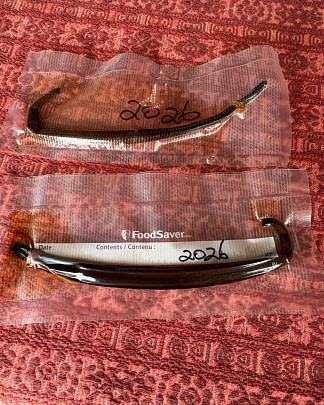
Once fully dried, the beans are vacuum-sealed (cryovaced) for storage. Properly sealed and kept closed, they'll last all the way through to the following year.
🥃 Making Vanilla Extract
Making Extract: Vodka and a Good Ratio
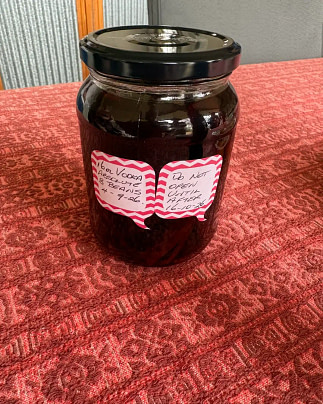
For those who want to go beyond whole beans, making vanilla extract at home is a simple next step. The method involves combining vanilla beans with vodka — though rum works too, according to one visitor who had researched it online. The critical detail is getting the ratio of vodka to the number of beans right. Too much vodka, and you'll notice it in the result — though as one garden member wryly noted, excess vodka has its own way of disappearing.
🍰 From the Garden to the Kitchen
When it comes to cooking, the process is simple: split the dried pod and scrape out the seeds inside. The seeds can be added directly to custard, cake batter, cream, or scone dough. Alternatively, you can split the bean and drop the whole pod into a custard while it cooks, letting it infuse before removing it.
Beyond the kitchen, vanilla pods make wonderful natural room fresheners. A single pod — opened or closed — placed on a plate or desk will fill a room with a gentle vanilla perfume. Closed pods last longer, and will keep their fragrance right through to the next year. They also make thoughtful gifts: bundled in twos and threes, they can even be displayed in a vase.
It's a long journey from a single-day flower to a fragrant pod in the custard, but as Terry's harvest shows — 70 beans this year, up from 20 the year before — the rewards of growing your own vanilla only get better with time.
💚 Sharing the BOGI Gardening Journey
Visits such as this are one of the special things about BOGI. Members can learn not only from books and presentations, but from seeing what other gardeners are doing, asking questions and sharing practical experience.
A big thank you to Terry and Sandy for welcoming BOGI members into their garden and sharing their experience of growing and processing vanilla.
From flower to bean, and from bean to kitchen—there's a lot more to vanilla than meets the eye! 🌿🫘