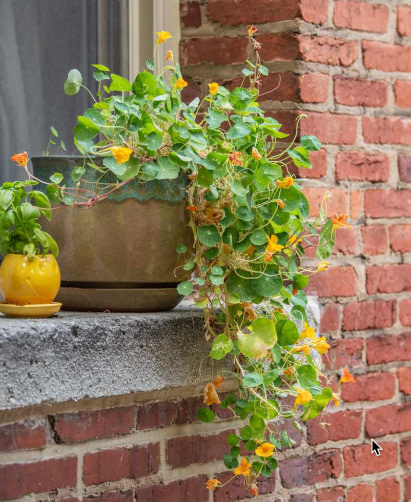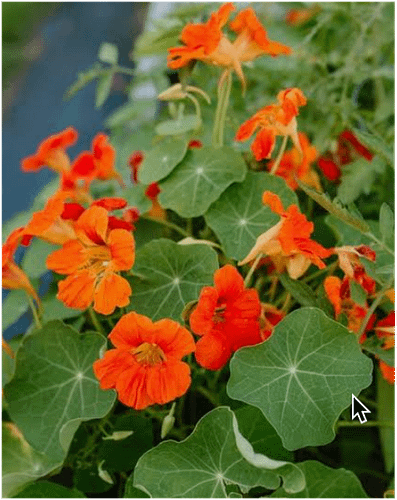
This South American native is beloved by many gardeners for its fiery red flowers and easy cultivation, and is also a fabulous bee attractant. Leaves, flowers and seeds are all edible, and all share a sweet, peppery flavour that is acknowledged in the name 'nasturtium', which has its roots in the Latin for 'contorted nose'. The dried ground seeds were even used as a pepper substitute during World War 2.
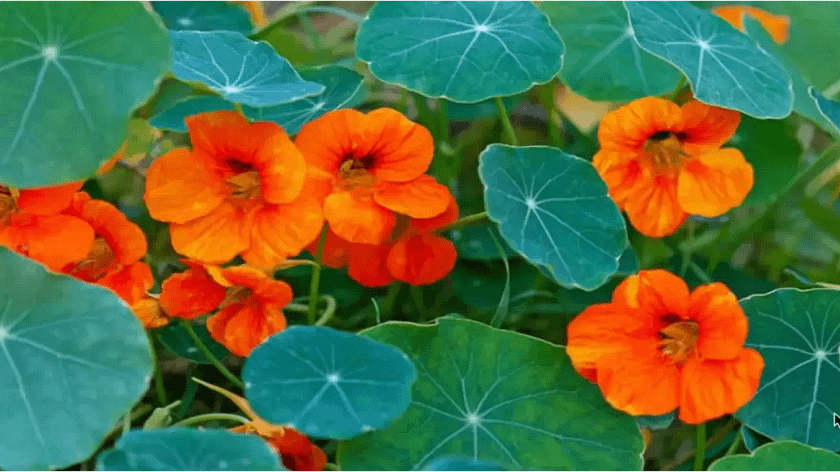
The leaves are delicious in salads; they can be used like vine leaves for making dolmades and can also make an excellent watercress substitute in egg sandwiches. Back in the day, kiddies used to love biting off the end of the flower tail and suck out the nectar, but grown-ups get to enjoy the flower too: they look amazing on top of a salad - can be stuffed with cream cheese mixtures if you want to make hors d'oeuvres like it's 1974, and unopened flower buds and seeds can be pickled and used like capers - it really works.
Nasturtiums' spiciness is more pronounced when the plants are growing in heat and sun. Those spicy mustard compounds can also take credit for many of Nasturtiums' medicinal properties. The plant has been used in Andean herbal medicine as a disinfectant, wound healer, antibiotic, and an extract has been tested as having effective anti -inflammatory and selective anti-microbial properties.
Mexican herbalists use a topical application of nasturtium for ringworm and claim the plant to be good against C... of the left lung! They might like to include the right lung too... Benzyl mustard oil, which can be extracted from nasturtiums, has been shown as effective against several types of tumorous cancers when taken orally.
These mustard oils are also known fungicides, and herbalists have prescribed soaking in a nasturtium bath for cases of athlete's foot. Nasturtiums, especially the flowers, are extraordinarily rich in the yellow pigment lutein, which is important for eye health and preventing blindness. Studies on Nasturtium tea have found it to be a powerful diuretic and treatment for high blood pressure. A blend of horseradish root and nasturtium is a proven treatment for urinary tract infection.
In the garden, Nasturtium is considered a good companion plant and is often planted at the base of apple and pear trees to deter codling moth.
I look forward to each winter when it arrives. In many of my garden beds, nasturtiums ramble through them, over pineapples, under fruit trees, over the lawn like a runaway pumpkin vine and clamour up and over any stalk it can wrap around.
Until this year, it was a welcome addition to winter nectar for my bees. As of mid 2026, there are no bees anywhere in my garden anymore; the arrival of the Varroa mite killed off all my hives and those of my neighbour. It will be very interesting to see what fruits and what doesn't next season.
I highly recommend stockpiling any local honey available for sale out and around - I fear it may not be around for long. As honey has no use-by date, it can be stored and used indefinitely. Also, perhaps due diligence is needed to determine which food plants do and do not need insects to pollinate them. Our choices will then be to change what we eat and grow, or get used to hand pollination techniques if there are no native pollinators in your area.