
Planting by the Moon: February 2026 Guide for Bundaberg Gardeners
Your complete lunar planting calendar for late summer in the Bundaberg region
February in Bundaberg brings the tail end of our wet season warmth—humid days, afternoon storms rolling in from the coast, and soil that's alive with activity. It's a transitional month in the garden, where we're harvesting the last of summer's abundance while quietly preparing for the cooler months ahead.
For those of us who garden by the moon, February 2026 offers a beautifully balanced lunar cycle to work with. Let's break down what to plant, when to plant it, and how to make the most of each phase.
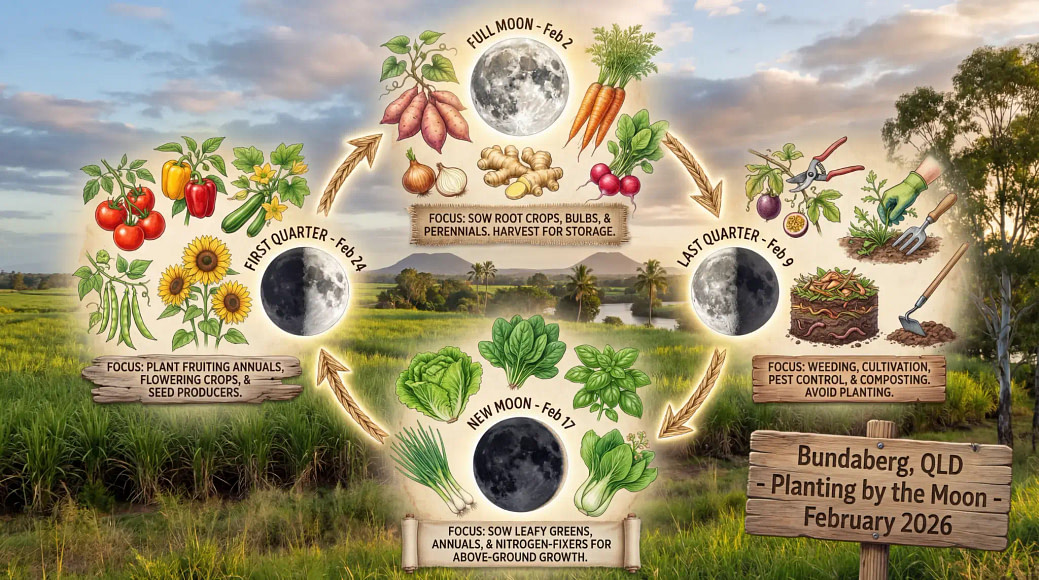
February 2026 Moon Phases for Bundaberg
Full Moon falls on Monday, 2 February — focus on root crops and bulbs.
Last Quarter arrives on Monday, 9 February — time to prune, harvest, and maintain.
New Moon occurs on Tuesday, 17 February — sow leafy greens and annuals.
First Quarter comes on Tuesday, 24 February — plant fruiting and flowering crops.
Full Moon — Monday, 2 February
The month opens with a full moon, and the energy is all underground. This is when lunar gravitational pull draws moisture down into the soil, creating ideal conditions for anything that develops below the surface.
What to plant: Beetroot (a Bundy favourite that handles our humidity), carrots (try Nantes varieties for our heavy soils), radishes for a quick turnaround crop, spring onions and shallots, ginger and turmeric rhizomes (they love our February warmth), and sweet potato slips if you can still find them.
Bundy tip: Our clay-heavy soils can be tough on root crops. Work in plenty of compost and coarse sand to improve drainage. Raised beds are your friend here, especially after wet season rain.
Last Quarter — Monday, 9 February
As the moon wanes toward darkness, sap flow slows and plant energy retreats to the roots. This is your window for garden maintenance—the tasks that keep everything ticking along but don't involve active planting.
What to focus on: Harvest ripe tomatoes, capsicums, and eggplants before the afternoon heat. Prune back leggy growth on herbs like basil before they bolt to seed. Weed thoroughly while the soil is still moist from recent rain. Turn compost heaps—they'll be cooking nicely in this humidity. Side-dress heavy feeders with compost or aged manure. Check irrigation systems before the dry season kicks in.
Bundy tip: February is peak fruit fly season. Now's the time to set up your traps and nets if you haven't already. Those tomatoes you've been nursing all summer will thank you.
New Moon — Tuesday, 17 February
The darkest night of the month marks a fresh start. As the moon begins waxing again, energy shifts upward—perfect for leafy greens and crops that grow above ground.
What to sow: Lettuce varieties (cos and butterhead handle our heat better than iceberg), Asian greens like bok choy, pak choy, and tatsoi, silverbeet and chard, rocket and mizuna for peppery salads, coriander (it'll bolt fast, so succession plant), basil (there's still time for one more summer planting), and parsley in both flat-leaf and curly varieties.
Bundy tip: Direct sow in the cooler parts of the day—early morning or late afternoon. February soil temperatures can still cook seeds before they germinate. A light mulch layer over newly sown rows helps retain moisture and keeps things cool.
First Quarter — Tuesday, 24 February
The half-moon brings balanced energy between roots and shoots, making this the ideal phase for fruiting crops. Plants set out now will establish strong root systems while also pushing upward growth.
What to plant: Tomatoes (yes, you can squeeze in one more round of cherry varieties), capsicum and chilli seedlings, eggplant transplants, beans in both climbing and dwarf varieties, cucumber and zucchini (they'll race in the remaining warmth), pumpkin and squash for an autumn harvest, rockmelon and watermelon if you're feeling optimistic, and flowering annuals like zinnias, marigolds, and cosmos.
Bundy tip: February plantings of fruiting crops are a bit of a gamble—you're racing against the cooling temperatures of March and April. Choose fast-maturing varieties and give them the sunniest spot in your garden.
Working With Bundaberg's February Climate
February is one of our most challenging months to garden in. You're looking at average temperatures between 23–31°C, humidity sitting high at 70–80%, typical rainfall around 150–200mm (our wettest month), and daylight hours decreasing as we head toward the autumn equinox.
Practical considerations:
The humidity is relentless. Fungal diseases love these conditions, so prioritise airflow when planting—don't crowd your seedlings. Water in the morning rather than evening to let foliage dry before nightfall.
Afternoon storms can dump 50mm in an hour. Make sure your drainage is sorted and your mulch isn't washing away. After heavy rain, check that soil hasn't compacted around root zones.
The Burnett River flats and coastal areas will stay warmer longer than properties up toward the ranges. If you're gardening at altitude around Childers or Gin Gin, you might find cooler nights arrive earlier—adjust your planting windows accordingly.
February Harvest Calendar
Don't forget to enjoy what's already growing. February should be delivering tomatoes (the main summer crop hitting peak production), capsicums and chillies, eggplant, beans, cucumbers and zucchini, sweet corn, rockmelon and watermelon, passionfruit, mangoes (late season), bananas (year-round in Bundy), pineapples, and dragon fruit.
A Note on Lunar Gardening
Planting by the moon isn't magic—it's pattern recognition refined over thousands of years. The gravitational pull that moves our tides also influences soil moisture levels. The moon's light affects plant hormone production and germination rates. Traditional farmers across every culture noticed these patterns and built planting calendars around them.
Does it guarantee results? No. Good soil, appropriate variety selection, and consistent care matter more than any calendar. But when you're deciding between planting on Tuesday or Thursday, the moon gives you a framework to work with. And there's something grounding about syncing your garden rhythm to the oldest calendar humanity has ever known.
Quick Reference: February 2026
1–8 February (waning after Full Moon) — Start with root crops, then transition to maintenance tasks.
9–16 February (Last Quarter to New Moon) — Prune, harvest, weed, and prepare beds.
17–23 February (waxing after New Moon) — Sow leafy greens, herbs, and annual flowers.
24–28 February (First Quarter onward) — Plant fruiting crops and flowering plants.
Looking Ahead to March
The autumn equinox approaches, and with it comes Bundaberg's most pleasant gardening weather. March will be your window for brassicas (broccoli, cauliflower, cabbage), peas and snow peas, broad beans, onions and garlic, and strawberry runners.
Start preparing beds now. Work in compost, check your pH, and let the soil rest before the March planting rush begins.
Happy gardening, Bundaberg. May your root crops grow deep and your leafy greens stay crisp.
Moon phase data sourced from timeanddate.com for Brisbane, QLD (nearest major city to Bundaberg).