Lenzie and Leah helped to demystify growing peanuts, following member queries after our seed planting
demonstration at our January meeting. Marlene has supplied the following notes. Many thanks, Marlene!
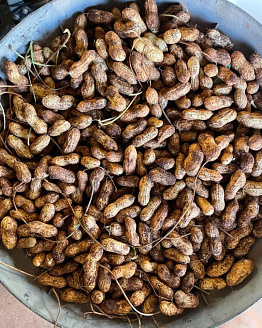
regardless of what they are, we know you'll agree they're delicious - raw, roasted, ground or crushed! And you
can easily grow them at home, in the garden or in large pots.
How to grow peanuts:
Step 1: Choose a sunny spot in the garden and enrich the soil with Soil Improver & Plant Fertiliser. If necessary,
apply Hydrangea Pinking Liquid Lime & Dolomite to raise the pH level to 6.5 or 7
Step 2: Using a trowel, dig a 5cm deep furrow and plant raw peanuts, spacing them 10-15cm apart. If sowing more than one row, allow 60-75cm between rows. Cover the seeds with soil and gently firm down with the back of a rake.
Step 3: Water well and mulch with organic mulch, like pea straw or lucerne to help retain soil moisture. Tip: If
the soil is well-watered, no extra watering is required until the seedlings emerge after 7-10 days.
Step 4: Water the plants regularly and deeply at least once a week or more, especially in hot and dry weather.
Step 5: As the plants grow, hill or mound the soil slightly against the plants for support. This will also help increase peanut production.
Step 6: Feed fortnightly with Liquid Plant Food
Step 7: When the foliage turns yellow and plants start to die down, it's time to harvest! Dig up the whole plant
with a fork, gently shake off excess dirt and hang upside down to dry in the sun for 3-4 days or until most of the
moisture has evaporated. Strip off the pods and store in air-tight containers or remove the shell and eat raw.
Growing tips
• You can use raw peanuts bought from health food or grocery stores for planting. Remove the shell just before
planting, but ensure the skin is still intact.
• When the flowers die, you'll notice they will develop a long 'peg', which causes the plant to bend towards the
soil and push below the surface. The tip of the peg enlarges and eventually develops into the peanut. Fascinating to watch!
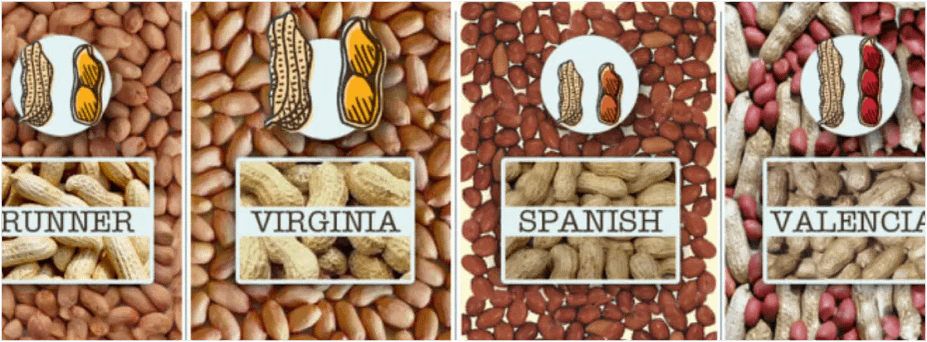
• There are three main types of peanuts that you can grow - Runner, Spanish and Virginia. The following photo shows four varieties. Photo courtesy of https://gapeanuts.com/how-many-types-of-peanuts-are-there/