
Sow Thistle by Pam Burgess
Sonchus oloraceus is also called Milk Thistle, but NOT the genus Silybum marianum. It is a familiar 'weed' (read Plant) throughout most of Australia, New Zealand and abundant throughout Britain and Ireland. This species is native to Europe and western Asia. It grows 50 to 100cm high with branched, leafy stems, grey - green leaves, that are huge as young healthy plants in your veggie patch, or scrappy, smaller leaves in a neglected area of the garden or wasteland. It has bright yellow, small flowers that become seed heads of white thistledown. If you leave it alone and allow it to flourish, it will provide you with copious amounts of leaf, which, when chewed fresh, or put in a cup with boiling water and honey and drunk as a tea, will provide you with pain relief - some say, equal to morphine.
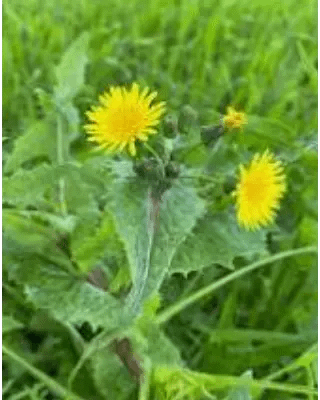
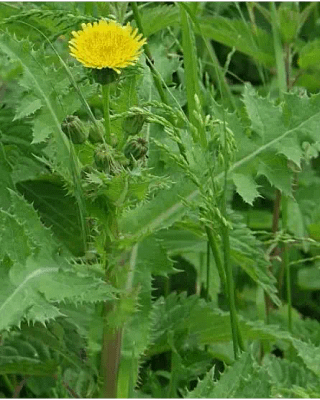
Used young, the leaves can be added to salads, soups and stews; it is another 'pot herb'. The leaves contain vitamin C, protein, fat, and carbohydrates. You can cook the stems like asparagus. My ducks and ducklings, when I had them, absolutely adored it. Before we knew of its benefits to man, we continually picked it for the animals. None of them missed a chance to gobble it up quickly. While the sheep are grazing my house yard, I have none in the lawns anymore; only in the fenced-off gardens. On a more sombre note, when Peter was in his later stages of cancer, he chose the sow thistle leaf, fresh, over CBD oil, quite often, as a means to relieve his pains.
Sow Thistle (Puha) is a traditional food of New Zealand. Māori often add it to a pot when cooking rich meat like pork. All parts of the plant, while green and growing, are rich in white milky latex, which has been applied to warts and ulcers. A timeless folk remedy, passed on to new mothers, encouraged them to eat milk thistle to boost lactation.
From my own experience, the plant has a season; thankfully, I seem to be able to find a plant all year round. While young and small, its healthy, happy leaves are bigger than my biggest Dandelion leaves; when it is tall, older and flowering, the leaves are smaller and more grey/waxy than the younger leaves, still useful and still potent. If allowed to live out its life and not pulled out or eaten by the sheep, it will finally pass away as hollow, straw-like twigs and dissolve practically in my hand, making it perfect for chop'n'drop in my gardens.
I consider this a really important plant in my gardens, and I will skirt around it, water it, let manure fall near its roots, and tolerate it wherever it chooses to grow. I never know when I will need pain relief, so I also choose to dehydrate and store a large jar full of leaves, just in case. For those of you who value every plant in your garden, this one needs to be found, identified, nurtured and used. It will be good for your body.
Note: Most, if not all, of the plants I discuss monthly, it will never be seen in a shop for sale; they only and always belong in a garden - hopefully your garden.
Cheers, till next time. Pam at The Haven